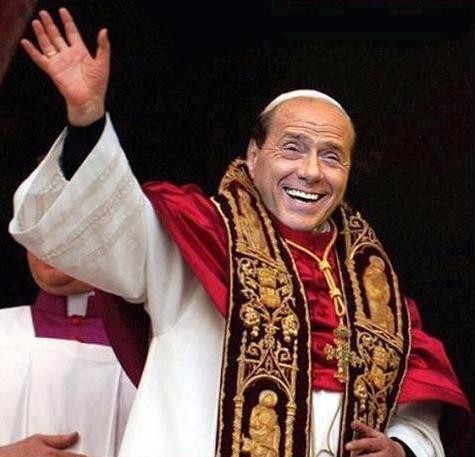
This weekend it's the F1 Belgian Grand Prix.
I was looking at some pictures from the press conference on Thursday and came across a funny one.
I just couldn't resist adding a few text captions.
It's probably a bit obscure if you're not following F1.
Showing posts with label Religion. Show all posts
23.8.13
31.3.13
Priests and scientists review
This boring book is in a way interesting but overall gets filed under 'boring'. I'm talking about Prêtres et scientifiques by Jean-Michel Maldamé.
I thought this was going to be an interesting read. I got bogged down. It took me three afternoons to finish a mere 200 pages.
The outset is good: What is the relation between science and religion for some well known priest-scientists and did they conflict in any way in their research?
To investigate this he chooses five priest-scientists from Pierre Gassendi (tried to reconcile Epicurian atomism with christianity), Bernard Bolzano (of Bolzano theorem fame; he is erronously named 'Pierre' Bolzano on the cover), Henri Breuil (prehistorian), Pierre Teilhard de Chardin (famous for having conflicts with Rome on the doctrine of original sin and a less strict interpretation of the book of Genesis) and home-grown George Lemaître (alumni of my university and the first person to propose the theory of the expansion of the Universe, widely misattributed to Edwin Hubble). The choice looked very promising. Different fields of research, different time periods, different stances on the religion/science relationshop. But...
I don't really like the way French authors write. They never use one sentence if they can say it in three. If I were just to read the two pages of the conclusion every scientist gets at the end of his own chapter that would have saved me a lot of bother.
Plus the author is very much biassed, being a dominican himself. He interprets certain things as very pious or courageous in light of religion and priestly devotion to the catholic cause.
Plus I cannot stand sentences with exclamation marks.
I did like how he explained the way the religion shaped the scientific research or the philosophical and theological work of the priest-scientists, although Lemaître stressed several times that religion had no place in scientific research and vice versa. Somewhere toward the end Maldamé concludes that these five men voulu lier les champs du savoir separé. But he does not present any convincing evidence for the case of Lemaître, quite the opposite.
Of course the author chose 5 individuals who were easy to analyze because they had written a lot about their relationship between their research and their religious background and calling. But I would like to have Maldamé broadened his research and find some priest-scientists who failed to keep religion separated from their science. I'm sure he could have equally found five of those which would have made a more varied and balanced read.
Anyway, it was a compulsory read for a subject I'm taking this year on the Church in society in the 19th and 20th century.
I thought this was going to be an interesting read. I got bogged down. It took me three afternoons to finish a mere 200 pages.
The outset is good: What is the relation between science and religion for some well known priest-scientists and did they conflict in any way in their research?
To investigate this he chooses five priest-scientists from Pierre Gassendi (tried to reconcile Epicurian atomism with christianity), Bernard Bolzano (of Bolzano theorem fame; he is erronously named 'Pierre' Bolzano on the cover), Henri Breuil (prehistorian), Pierre Teilhard de Chardin (famous for having conflicts with Rome on the doctrine of original sin and a less strict interpretation of the book of Genesis) and home-grown George Lemaître (alumni of my university and the first person to propose the theory of the expansion of the Universe, widely misattributed to Edwin Hubble). The choice looked very promising. Different fields of research, different time periods, different stances on the religion/science relationshop. But...
I don't really like the way French authors write. They never use one sentence if they can say it in three. If I were just to read the two pages of the conclusion every scientist gets at the end of his own chapter that would have saved me a lot of bother.
Plus the author is very much biassed, being a dominican himself. He interprets certain things as very pious or courageous in light of religion and priestly devotion to the catholic cause.
Plus I cannot stand sentences with exclamation marks.
I did like how he explained the way the religion shaped the scientific research or the philosophical and theological work of the priest-scientists, although Lemaître stressed several times that religion had no place in scientific research and vice versa. Somewhere toward the end Maldamé concludes that these five men voulu lier les champs du savoir separé. But he does not present any convincing evidence for the case of Lemaître, quite the opposite.
Of course the author chose 5 individuals who were easy to analyze because they had written a lot about their relationship between their research and their religious background and calling. But I would like to have Maldamé broadened his research and find some priest-scientists who failed to keep religion separated from their science. I'm sure he could have equally found five of those which would have made a more varied and balanced read.
Anyway, it was a compulsory read for a subject I'm taking this year on the Church in society in the 19th and 20th century.
13.3.13
12.3.13
Black smoke: a tell-tale sign?
I've never seen such utter black smoke billow out of a chimney! As if it came straight from Satan's bottom.
I mean, we all saw the Italian fire brigade on the roof installing the pipe extension but did they sweep the chimney first?
They could be in for a down right nasty surprise down in the Vatican.
All those cardinals sealed up in a room. They could all have died from carbon monoxide poisoning for all we know.
Alternatively, they could be:
a) having a barbeque
b) having an old fashioned cross burning
1.3.13
28.2.13
25.2.13
19.2.13
Dark Sky Status
I want to live in an area with a Dark Sky Status so I can resume the full star gazing experience. It must be awesome to be standing there with a telescope among the ruins of Llanthony Priory.
16.2.13
Pope retires ... not yet
The pope announced his retirement last week.
But no time to waste to follow up on other interests he never had time to pursue.
Pope Benedictus XVI has been confirmed for a part in the upcoming sequel to The Three Amigos.
But no time to waste to follow up on other interests he never had time to pursue.
Pope Benedictus XVI has been confirmed for a part in the upcoming sequel to The Three Amigos.
23.7.12
Dig it!
From tomorrow 'till 29th of July there is Dig the City @ Manchester. This is a picture from one of the roofs of Manchester Cathedral taken by someone setting up some lighting stuff for the festivities. Looks like the drains are blocked. Probably the empty gin bottles and other rubbish found there are covering every possible water evacuation hole. I probably do not need to point out that this is detrimental to the building. And health in general.
Headless birds floating in the water.
I spy botulism....
18.4.12
Speakers in al Azhar mosque, Cairo
I found an image in the 1930's Dutch catholic magazine I'm leafing through, of a completely new Philips-speaker installation in the Al-Azhar Mosque in Cairo, Egypt. You can see a man putting up a sign in the court yard saying 'Philips Radio' and the Philips star logo.This must have been installed ca. 1936 under the auspices of Mustafa al-Maraghi who was rector at the time.
The author of the little text clarifying the picture applauds the use of modern technology for religious services. He writes: 'In our country people are hesitant toward or reject outright the idea of speakers in a catholic church. The muslims thinks differently about the application of modern technology and have just installed a completely new speaker-system!'
12.4.12
Rebel without a Specola Vaticana
I stumbled upon a review of the inauguration of two new telescopes of the Vatican observatory at Castel Gondolfo in the mid 1930's. The Specola Vaticana at that time had a Zeiss Visual Refractor Telescope (aperture 40mm, focal lenght 600mm, and a Zeiss double astrograph installed in the pope's summer residence 24 km south of Rome. It chose this location and moved out of the Vatican gardens because of light pollution tightening the grip on modern Rome.
The article contained a picture of Pope Pius XI standing outside the observatory talking to father Johannes Stein, the Dutch director of the Vatican Observatory. It reminded me of another scene in front of an observatory. I was thinking of the famous knife fighting scene in Rebel without a cause at the Griffith Observatory in Los Angeles. Sure, James Dean is no pope (and vice versa), but there is an eery similarity between the two settings...
10.4.12
Gothic Revival beer tasting
I suppose most people spent Easter eating loads of jummy stuff or hunting for eggs. Dr Livingstone, Miller B, his spouse and myself went to a beer festival in a decommissioned neo-gothic chapel. How much more Belgian can you get?The Lady chapel of the hospital, in the Gothic Revival style, was completely restored in 1998-99. It was built and inaugurated in 1905 and was designed by Peter Langerock. The seven neo-Gothic stained glass windows were designed by Gustave Landon a glazier from Ghent. In 1926 the walls were decorated with neo-Gothic designs. The frescoes of the Cross, along with two other painted scenes of St. Francis of Assisi and St. Elizabeth of Hungary were made by Hungarian painter Gábor Balogh Bëod.
Alas Miller B's wife doesn't like beer and Dr Livingstone volunteered to be Bob (that's the designated driver for you non-Belgians). So it was just down to two of us to order beers and pass them around to taste.
Dr Livingstone did order just one, which none of us liked. It seemed stale, no foam when the beer was poured out. It didn't actually taste of anything special, so it was a bit sad to have to clear away a full glass.
We started out with blond beers Vossen met de Meynen and Excalibur, accompanied by Dr Livingstone's St Bernardus' Wit. It was a pity, he had been looking forward to tasting this, it had been on his to do list for some time.
He did order a dark low alcohol dinner beer by Bavik brewery.
We had some amber beers for our second helping. Miller B moved on to Buffalo Bitter and I decided on a Cuvée des Trolls.
Last order consisted of dark beers Val Dieu and Dikke Mathile.
I asked Miller B if he had ever dreamed he'd one day be drinking beer in the very same chapel where he had to go to mass on Sunday.Roman Catholics are not averse to using alcohol during mass, but they're not too big on beer fermented after bottling. Body of Christ-wise.
It was fun, albeit a bit short. We should have had some bread to clean the palate in between because after my first beer I could not really distinguish other tastes clearly.
Anyhow, I did have a slight lingering head ache on Monday...
17.3.12
Nun-approved wax
Way back in the 1930's cooperations were testing the water and seeking out new fishing grounds to flog their products.Johnson's Wax Company advertised in Roman Catholic Magazines.
A Dutch 1933 ad shows a nun slaving over a wooden floor, scrubbing and polishing away.
On the opposite side we see a nun standing next to a Johnson fluid wax can looking quite pleased.
'Hundreds of children! and yet.... all floors stay brilliantly clean!'Looks like Johnson Wax is just in the nick of time to save the dear sister from some nervous break-down or a few kids from some corporal punishment involving a ruler of some kind.
At the time of the ad SC Johnson & Son had 4 factories employing some 50.000 workers. The main Dutch office was located in THe Hague.
9.3.12
Moving Pulpit
Modernity really kicked in during the 1930's in churches and hospitals/old folks homes run by brothers and sisters of various religious orders.In Amsterdam, in the Gesticht van Liefde St Bernardus, a moving pulpit was used and rolled to the middle of the chapel to facilitate the (plentiful) elderly who were hard of hearing.
It was made of wood on a pedestal, placed on two rubber wheels and two supports at the front. At the sides there was an iron rod to prevent the thing from flipping over during the sermon and to easily move it about.
It measured 0,80 x 1,05 meters and was 1,4 meters tall.
A microphone could be secured at the front so speakers could be used in the back of the chapel, or in other parts of the hospital so those who could not get out of bed could hear the service.
Here's another crazy moving pulpit contrapion in Carlisle (UK).
5.3.12
Smelly arm-pits and pongy feet
Churches crammed with religious folk are a thing of the past in Western-Europe today, but not so in the 1930's. A lot of people in a closed locale wasn't too pleasant before aftershave and deodorant were prolific among the masses.
So mediating smelly arm-pits and pongy feet in summer through the use of ventilation became a hot topic.
Ventilation in silent-running mode of course. Acoustics was/is a big issue in church buildings and extra noises were/are to be avoided.
Numerous are the articles on how d.i.y.-priests could tackle noisy pipes in their own House of God.
A cross-section drawing of a ventilation-installation show a possible set-up for expelling the foul air. There is a preference expressed that it be vacated through the bell tower if at all possible.
However there is not a mention on how fresh air is to be pumped into the church.
My guess is the priest would be hunting down whistling doors from drafts in the building instead of poltergeist-like banging sounds in his plumbing system.
1.3.12
'Cept for the Pope maybe in Rome
Another gem of a picture concerning the installation of telephone wires in the Belvedere in Vatican City in 1930. My guess is this is at the Cortile or the beginning of the Galleria delle Statue. I think those iron gates are still there but I could be very wrong. I didn't find any pictures of the mounted figure on horse back behind the men posing for the picture, and there are stairs where (I think) the statue could have been.
According to the Vatican Telephone Service the first central telephone exchange, donated by the American Catholics in 1930, was installed in the Belvedere building and provided telephone services for approximately 360 end users; it remained in use until 1960 when it was replaced by a Pentaconta exchange with a capacity of 1,500 numbers later extended to 3,000.
My source specificies there was approximately 80.000 meters of cable involved, connecting 400 telephone sets, but expandable up to 800. The telephone exchange was consecrated by the Pope on the 19th November 1930. The Bell Telephone Rotary-system was state of the art at the time.
You could: 1) dial a direct phone set inside the Vatican
2) get a connection with any phone with only two numbers
3) get an automatic connection with someone in Rome by just dialling the number and adding a "0" in front for an external line
4) Answer calls from outside the Vatican at a post with 2 (!) seating areas and
5) priority for some telephone sets for emergencies and important calls.
Here's Pope Pius XI sitting next to his gold-inlayed Bell telephone.Which reminds me of a Jewish joke I read somewhere:
A leading Israeli Rabbi had a meeting with the Pope. While negotiating a papal visit to The Holy Land, the Rabbi noticed a distinctive red phone on the Pope’s desk.
The Rabbi asked what the phone was for. The Pope explained that it’s a direct line to God.
The Rabbi asked if he could test it, and the pope replied, “Of course, but you should leave one-hundred dollars for the call.” The Rabbi thanked him and used the phone.
A few months later, the Pope was visiting Israel as they had planned, and he made sure to make a stop to visit his new Rabbi friend. While talking, the Pope noticed a red phone on the Rabbi’s desk.
The Pope asked, “Is that what I think it is?”
The Rabbi said, “Of course.”
The Pope asked if he could test the phone, and the Rabbi said that he could but that he needed to leave fifty cents for the call.
The Pope was surprised: “You use my phone to God and I ask you to leave $100; but when I use your phone to God I am to leave only $0.50. Why is that?”
The Rabbi smiled, “From here it’s a local call.”
26.2.12
Reading assignment
I got a small reading assignment for my class on Conservation of Monuments.It's Meer dan hout en Steen. Handboek voor sluiting en herbestemming van kerkgebouwen by Harry Bisseling, Henk de Roest & Peet Valstar (eds.). It's a recent publication (2011) published by the protestant Uitgeverij Boekencentrum.
The closure of churches is a higly topical subject and the book looks like it has a well thought about structure, but I'm a bit worried the anecdotal/religiously inspired side of the book will overpower the researched part.
Nothing wrong with that, but not an angle law-makers or estate agents will be interested in.
I'm preparing a presentation for my fellow students (all of them architect-engineers) on this book, it's due within a couple of weeks.
25.2.12
Cold feet in church?

These drawings were taken from a 1931 Dutch Roman Catholic magazine reporting on an efficient heating installation for church goers.
The author of the article complains about how much cold he has suffered in Roman Catholic churches for want of proper heating.
Even priests in the pulpit, for as long as three quarters of an hour at temperatures somewhere around freezing point, can have their own made to measure pulpit-heating. This was sold by Siemens-Schukert in The Hague.
To this day no research has been done on how many of these were actually sold and how much of these remain in churches up to this day.A lot of them have ignorantly been removed during restauration campaigns or for conservation purposes. Alas it is still not recognized that electrical installations (among other 'modern' comforts) are also very much part of the church interior and its history. It has every right to be studied, conserved and researched, just like -say- a 17th century devotional statue.
I intend to do my small bit of awareness raising through my paper on electrical lighting in churches.
24.2.12
Ongoing research
I was in Nijmegen (The Netherlands) at the Radboudt University this week doing some research for my paper on electric lighting in chuches.Very nice library staff, very cosy lounge area and ... good cofee from the coffee machine to keep me going!
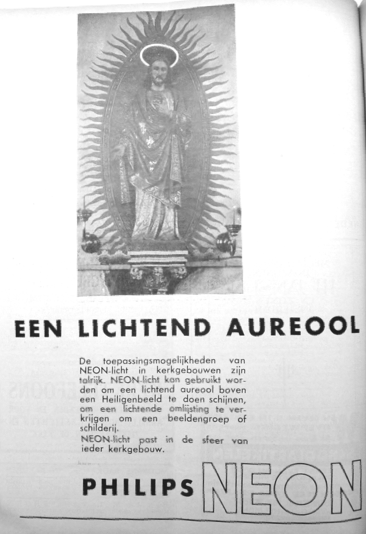
Alas the book lift was being serviced, so it took a little bit longer to get the books and magazines I ordered from the reserves. There was an annoying man sitting opposite me reading the newspapers and incessantly clicking his biro.
I sensed he was looking up to me now and again to see if I was going to say anything or getting visibly annoyed.
I was however too immersed in all the wonderful stuff I found and loving every minute of it.
They always say you're allowed to celebrate with brandy if you've done a great archive find (well, that's what one of my professors has coerced me into believing).
The lighting on the desks was slightly inefficient (too far back toward the middle of the table to assume a comfortable reading position) and I had to move the volumes to and thro to take pictures which would have an admissible light level. This resulted in some black marks being left on the nice white desk surface. Heh. Mrs B leaves her mark...

Subscribe to:
Posts (Atom)